I’ve been working on a writing project around the Grey Album, and that’s required a lot of research and digging into events that unfolded in 2003 and 2004. In some ways that’s incredibly frustrating: nearly every link I encounter is broken and requires more searching or an Internet Archive lookup ((thank god for the Internet Archive!)), and in some cases can’t be dug up at all. But in other ways it’s great, as the years between have been plenty of time for new information to come to light and sometimes heated issues to cool down.
One basic thing is that, in the years since the Grey Album was released, Jay Z and Paul McCartney have both said on the record that they considered it a tribute and weren’t bothered by its creation.
Paul McCartney was asked less directly on a BBC1 special called “The Beatles & Black Music“. The whole special is fascinating, but here’s what he had to say about the Grey Album in particular:
I haven’t found any record of Ringo commenting. If you find it, please let me know.
I had the pleasure of using Noisebridge’s book scanner to “rip” a couple of rare or unusual books I had lying around. So far as I could tell, none of these had been digitized yet, so that’s kind of exciting. Here’s a picture of me at work, taken by Maira.
Anyway, the scanner is really great, and a work in progress, so for now all it does is dump the photographs—high res images taken by DSLRs affixed to the machine—as sequentially numbered JPEGs in a directory on an attached computer. For a 600 page book, that’s over a gigabyte of photos, and not terribly useful as a digitized book.
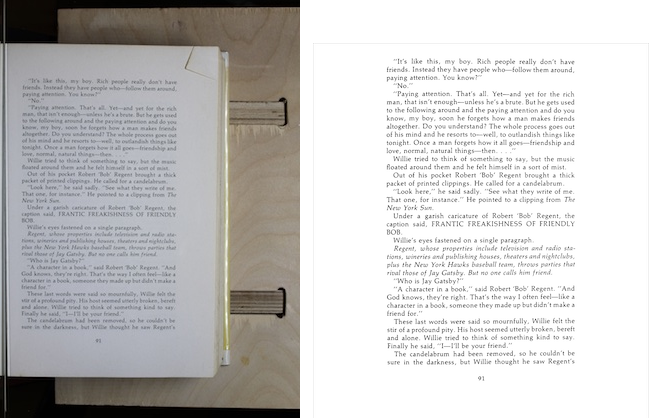
So I used ScanTailor, which is a great piece of free software, to take a page that looked like the one on the left and (basically running on autopilot) output one like that on the right.
But then I had a directory full of TIFFs, which looked great but were not as portable as a PDF or OCRed to be treated like text. With a little help from smart people like Eric and Seth, I was able to write a script to loop through that directory and output a big PDF, and another to run the images through Tesseract and output an OCRed text file.
These are really really simple scripts (which is good because I’ve got no idea what I’m doing), but in case those are useful to anybody I’ve put them up on GitHub (and even released those three-line loops into the public domain, ha.)
The next step, I think, is manual proofreading. Unfortunately, I don’t think that can be scripted.
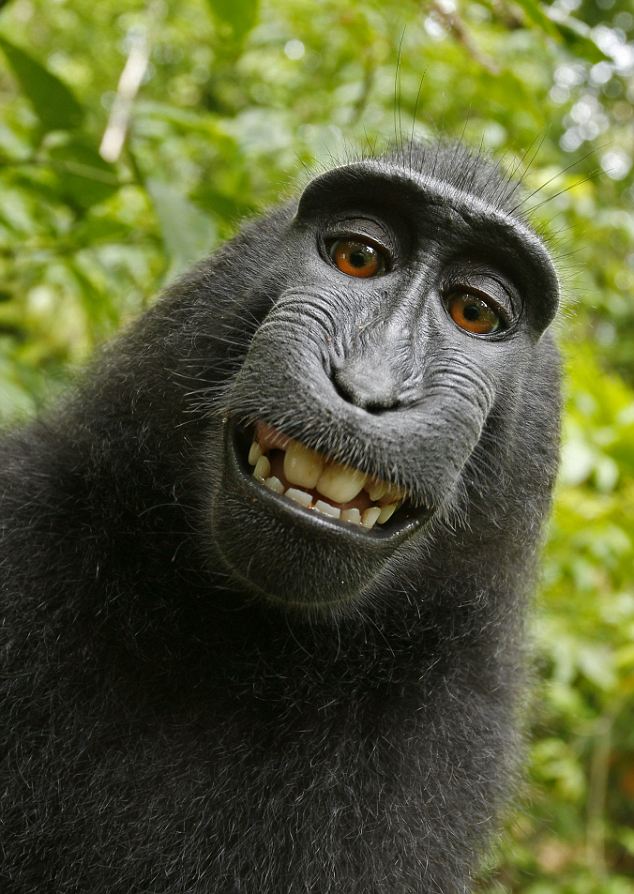
In honor of the Oxford Dictionary Online selecting “selfie” as its word of the year, ((personally, I think it’s too soon to tell; historically, some of the best words appear for the first time in late November or early December.)) here are a few examples of remarkable selfies from the public domain. Why might a work–selfie or otherwise, be in the public domain?
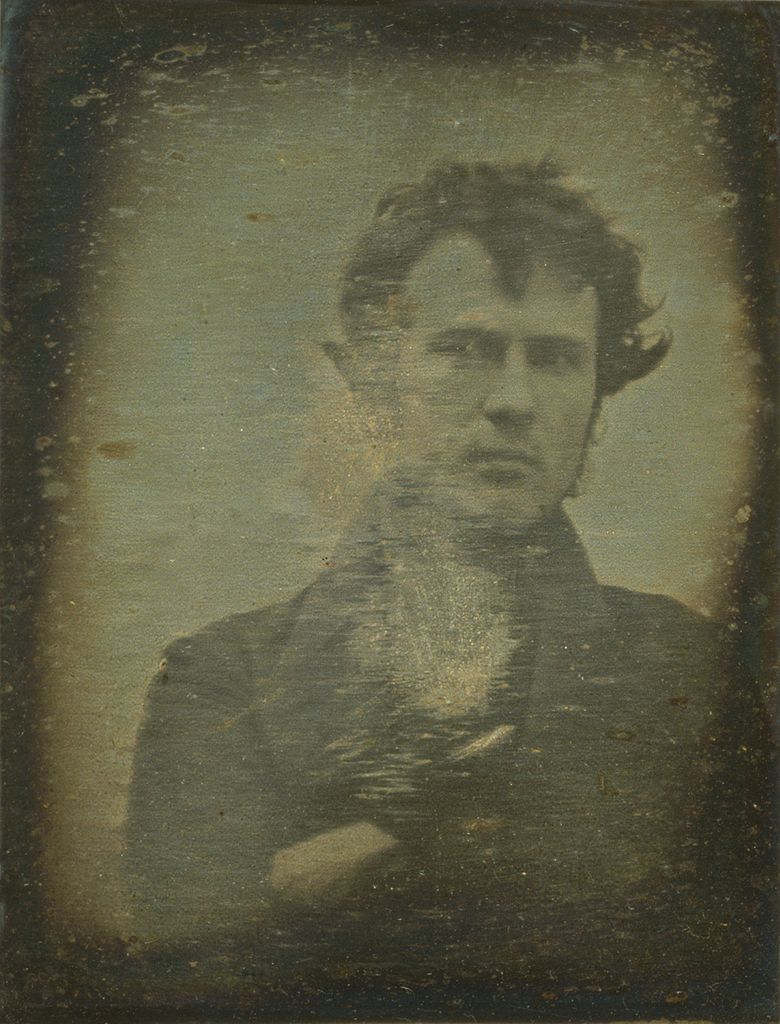
Perhaps it’s old enough that the copyright term has lapsed. In the US that is definitely the case if the work was created before 1923, and so certainly includes this first-ever selfie by Robert Cornelius from 1839 ((although it’s the image was probably never covered by copyright at all, given that photographs weren’t eligible for copyright until 1865.)):
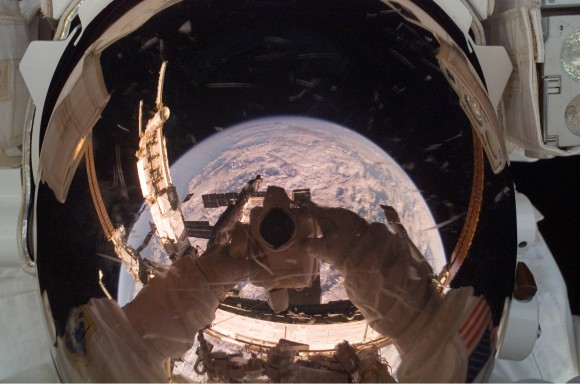
A selfie might also be in the public domain if it were taken by a US government employee in the course of his or her work. Not many government employees take selfies, but astronauts definitely do.
It’s easy to get bummed out about how much Congress and the Courts have undermined the public domain in the US in the last several decades. But there’s still plenty to celebrate in there.
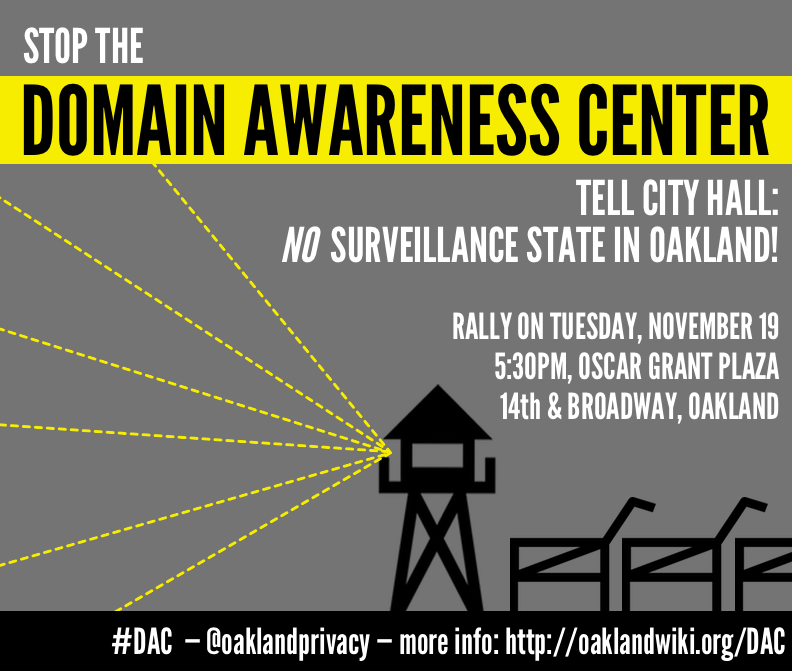
This Tuesday, November 19, Oakland City Council will hear comments on its plan to spend $7 million of DHS money on a “Domain Awareness Center” that would aggregate surveillance data from many different channels about the residents of Oakland. The New York Times wrote up some of the privacy concerns people have with such a plan. I made the flyer above (please share widely!), will be attending, and have submitted a comment card.
I helped Maira edit an excellent piece that she wrote for the EFF blog this week called “How Can the New York Times Endorse an Agreement the Public Can’t Read?” Fortunately, the article has gotten a lot of pickup, and I think it’s raising some very important questions that haven’t hit the mainstream. (In part because there hasn’t been much media coverage of the TPP at all, which in turn stems from the secrecy of the agreement—media organization unwilling to speculate about the contents or report on the secrecy itself are simply not going to cover it, which is kind of the point of the secrecy in the first place.)
The post hit the top of Hacker News, and some people in the discussion there (and in other places) suggested that the Times editorial in question is not in fact an endorsement, or that it’s a conditional endorsement only of a “good agreement” and without the suggestion that any particular draft of the TPP is, in fact, that. Sorry to those people, but I don’t buy that for a minute.
First, we’re talking about the Editorial section of the New York Times here. There’s no Twitter bio up top insisting that repeating the government line isn’t an endorsement. The entire purpose of that section is to represent the opinion of the editors; are we to believe that the editors are using this space to stake out the controversial claim that “a good agreement would be good”?
There’s the question of timing. Had this editorial come out, even word-for-word, at the beginning of the talks, it may not be an endorsement of the agreement but of the stated goals. But that argument doesn’t cut it just months out from the supposed completion date. Saying “Springfield needs a nuclear power plant” means one thing when the town is considering calling for bids, and quite another after Mr. Burns has broken ground. There has for at least 18 months been a process underway, and it has been outrageously secretive, and the Times does not mention that fact at all.
Newspaper endorsements are often explicit about using the word “endorse,” especially when talking about political candidates. It’s true that this editorial did not do so. But turning to the English definition of the word: it’s hard to imagine a layperson reading the piece and not coming away with the impression it provided support or approval of an agreement.
And frankly, if at this stage in the process the New York Times thinks it’s possible to produce a proverbial “good agreement” in a process that has defied transparency as brazenly as the TPP has, that’s an endorsement in itself.
We’re in a crucial stage of the campaign against the secret agreement that we believe—but of course cannot confirm—contains language that would absolutely be detrimental to Internet users everywhere. The “fast track authority” process, which the Obama administration has suggested is essential to passing the agreement but which strips away one more layer of accountability, is on the rocks.
An endorsement from the New York Times at this stage sure looks like a favor to the administration and a way to clear opposition on the left. Without any access to the text of the agreement, that uncomfortable assumption is hard to disprove. If the Times thinks it isn’t endorsing the agreement, I’m curious to know what it thinks it did. If it’s endorsing without access to the text, that is unforgivably reckless behavior for a newspaper. And if it has access to the text but won’t publish, it has lost sight of its duty to the public interest.