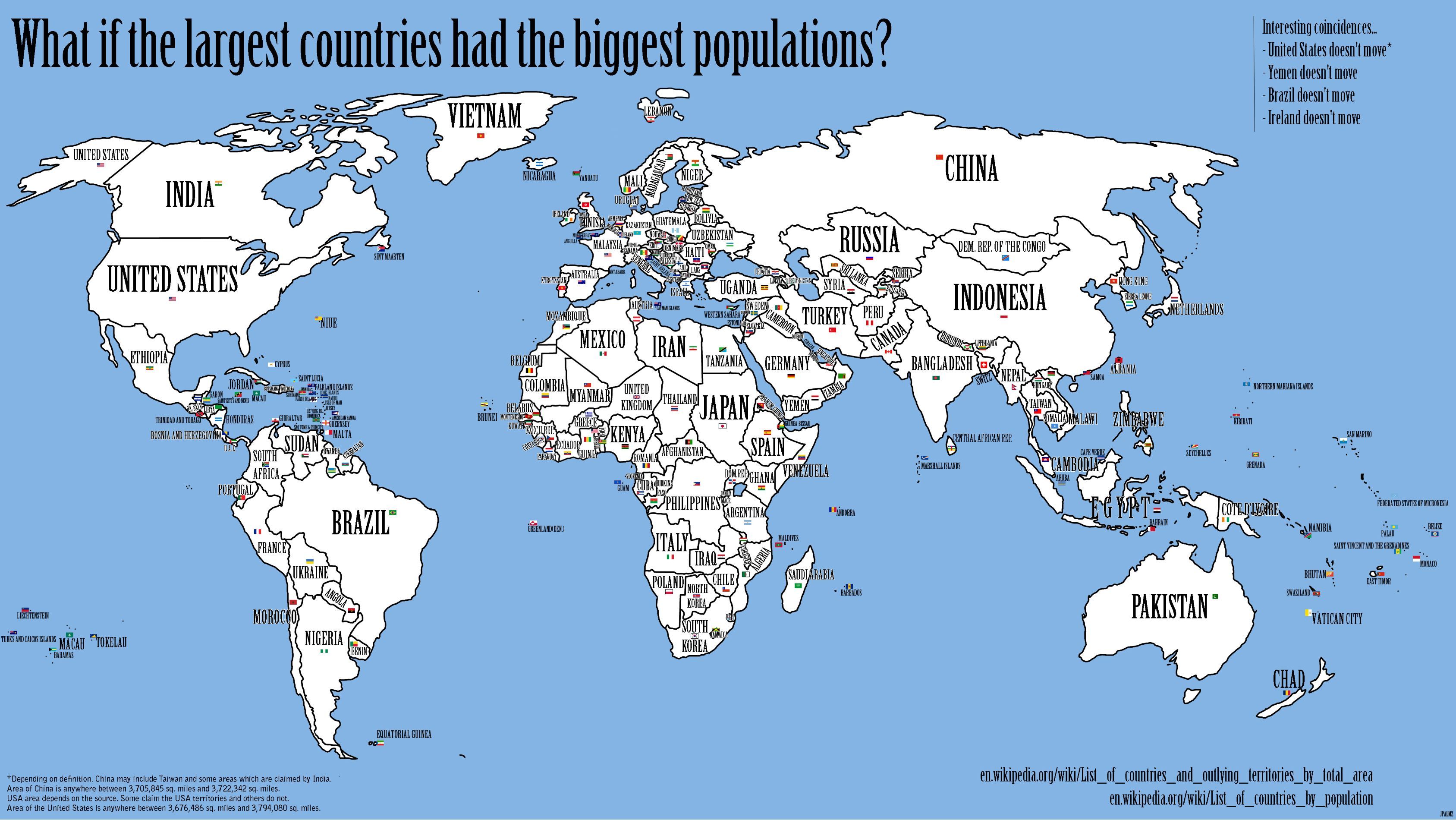
I came across a very interesting map by redditor JPalmz that showed the countries of the world, re-arranged to match population with land area. I thought it was very cool, so I decided to do the same thing with US states. You can see the results below, but you may need to click through to see it full size in order to read the names of the states clearly.
Some interesting results: only Texas stays in the same place, Delaware and Vermont swap, and Rhode Island becomes a real island.
UPDATE: I’ve done a lot of work on these and put together a much more polished version, which is now available in a later post.
I’ve put together a set of screensaver images for Kindle models with 800×600 displays. (That’s all of them except the DX, as far as I know.) The collection is all segments of transit maps from around the world. For this first version, I’ve limited it to a handful of systems I’ve ridden, so this one includes ten maps from the US and Europe.
This is an early version, and doesn’t yet include a “Slide and release the power button to unlock” notice or anything. I’ll probably add that and improve the contrast on some of the images, which came out a bit gray. I’m happy to take other feedback, or suggestions for maps to include in later versions.
I’m heading out to the Mozilla Drumbeat Festival in Barcelona tomorrow through Friday. I hope to meet lots of interesting people there, talk about lots of interesting things, and hopefully write something up for these pages. Say hi if you see me there!
Patent terms are somewhat human, at 20 years—things invented and patented in my lifetime have now fallen into the public domain. Copyright is so much longer (generally, the lifetime of the author plus 70 years) that generations can pass in between the original composition and the public domain. As a result, instead of having free access to works from my childhood, or even my father’s childhood, I have to go back to works that are older than my grandparents.
The East German patent story is interesting because it happens to couple term expiration with a real and memorable event. Of course, copyright expiration is often tied to a historical event: namely, the death of the author. In some cases, that date is especially significant. There has been some discussion about that the copyright on Mein Kampf is set to expire in 2015, 70 years after Hitler’s death, but I’ve never seen any discussion of the fact that between now and then, works by millions of people who were killed during World War II should also be entering the public domain.
The Free Culture Research Conference is happening right now at the Freie Universität in Berlin. I’m here and live-blogging it right today and tomorrow, and posting tweets and dents tagged #fcrc, and I’ll probably post some kind of wrap-up later.